
What Is Smart Parking? The Complete UK Guide
There were 42.4 million licensed vehicles in the UK at the end of March 2026, according to the Department for Transport. Nobody can say with the same confidence how many parking spaces exist to hold them. The Office for National Statistics holds no figure for dedicated parking spaces, and the nearest estimate anyone has is an industry one from 2012. So the vehicles are counted precisely and the spaces they park in are not counted at all. Parking is measured site by site, by the people who run each site, and that is where smart parking begins. The category is wider than any one product in it: reading, guiding, taking payment, enforcing and reporting, joined up so that a car park can finally see itself. Here is what each of those layers does, how they work together on a live site, and what UK and Irish law allows.
30 July 2026 / 9 min read
By Tim Marting, Head of International Business Development
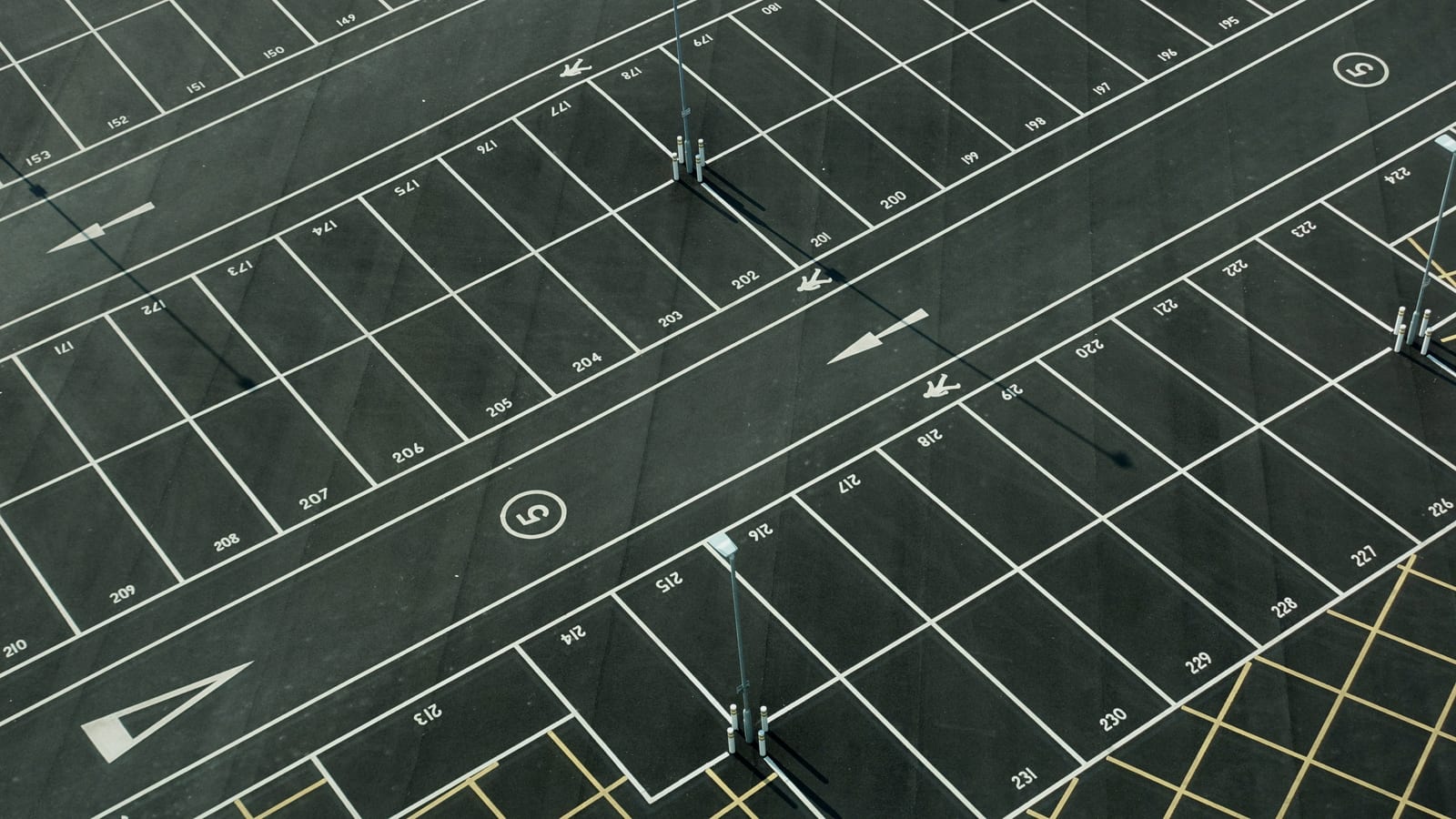
What smart parking actually means
Smart parking is not a single product. It is a set of connected capabilities, cameras, software and payment tools working together, that let a car park know its occupancy, its income and its demand as they happen rather than a month later. The phrase describes the whole category, not any one piece of equipment in it.
The old way was a token from a machine or a person in a booth, and a manager who could tell you roughly how busy last month felt. Nobody could prove what happened on a given Tuesday. On a connected site cameras and software log every arrival and every departure, so occupancy and income become facts rather than impressions.
The same gap shows up in the industry's own numbers. The Office for National Statistics has confirmed, in a freedom of information response, that it holds no data on the number of dedicated parking spaces. The Department for Transport's civil parking enforcement statistics measure penalty notices rather than supply, and have not been updated since 2012.
The nearest thing to a national count is older still. The RAC Foundation, drawing on Parkopedia and Parking Data and Research International, estimated in 2012 that Great Britain had between 17,000 and 20,000 non residential car parks holding between 3 and 4 million spaces, counting retail, workplace and hospital sites too. That is a useful industry estimate rather than an official figure, and it predates most of the technology below.
Each of those 42.4 million vehicles ends its journey parked somewhere. Before a site can guide a driver, charge fairly or enforce anything, it has to know itself: how many spaces it has, how full they get and when. That is the job the first layer does, and everything else is built on top of it.
The 5 layers of a smart parking system
A smart parking system is built from 5 layers. Read identifies the vehicle, guide directs it to a space, transact takes the payment, enforce confirms that payment was made, and report turns all of it into usable data. A site can run one layer or all 5, and it can add them in stages.
No site has to buy the whole stack at once. Some only ever need to read and report. Others want the full chain, from the first plate read to the monthly invoice a business customer receives.
Read is where a system starts. ANPR cameras capture the plate on arrival, so the vehicle itself becomes the reference for the visit rather than a piece of card that has to be kept safe and produced later. Everything after it hangs off that first read.
Guide and transact sit close together. Car park signage points drivers towards free bays or towards charging, and the stay is settled through a payment kiosk or the driver app instead of a booth. EV charging is increasingly part of the same visit rather than a separate errand.
Enforce is where barriers earn their place. A barrier holds a vehicle until access is cleared, which suits a staff car park, a secure building or anywhere entry has to be certain rather than checked afterwards. Parka supplies and supports barriers and access control alongside cameras, because a gate is exactly what some sites want, as well as the record a camera keeps. On an open site the same job is done by checking the read against payment.
Report closes the loop. The operator platform and the occupancy and analytics dashboard turn every read and every payment into a picture of the site, so a manager can see what is happening without walking the car park to count cars.
| Layer | What it does | What it looks like on site |
|---|---|---|
| Read | Recognises a vehicle at the entrance | A camera captures the plate on arrival |
| Guide | Sends a driver to a free space | Signage points to open bays or charging |
| Transact | Collects what the stay costs | An app, kiosk or account settles it |
| Enforce | Checks the stay was paid for | A barrier holds the vehicle, or a camera flags it |
| Report | Turns the day into numbers | A dashboard shows occupancy, income and trends |
How it works on a live site, start to finish
A vehicle arrives and a camera reads its plate, which opens the record for that visit. During the stay the driver pays by app, kiosk or account rather than with cash. On exit the same read confirms the vehicle is clear to leave. Every step lands in the operator platform on its own.
Follow one vehicle through a connected site and the mechanics stop being abstract. It arrives, and a camera reads the plate on the approach. No token is issued and no button is pressed. That read is the first line of the visit, timestamped and held against the vehicle for as long as it stays. Our explainer on how ANPR cameras work covers that read in detail.
During the stay, payment happens away from any booth. The driver settles up in the app, at a kiosk or through a linked account, usually without touching cash. UK Finance put contactless at 39% of all payments made in the UK in 2024, across every payment type there is, so the driver who expects to pay that way is not the exception.
Parka's app adds a detail worth knowing. Drivers can select the site they are actually at, a car wash rather than the car park beside it, instead of relying only on the read to work it out. That matters wherever 2 paid facilities sit close together, and it is the kind of thing that shows up once you run sites rather than specify them.
Leaving is that same check in reverse, and on a gated site the barrier rises on it, so camera and barrier do the job together. Arrival, stay, payment and exit land as one record in the operator platform, ready to report on rather than reconstruct from memory at month end.
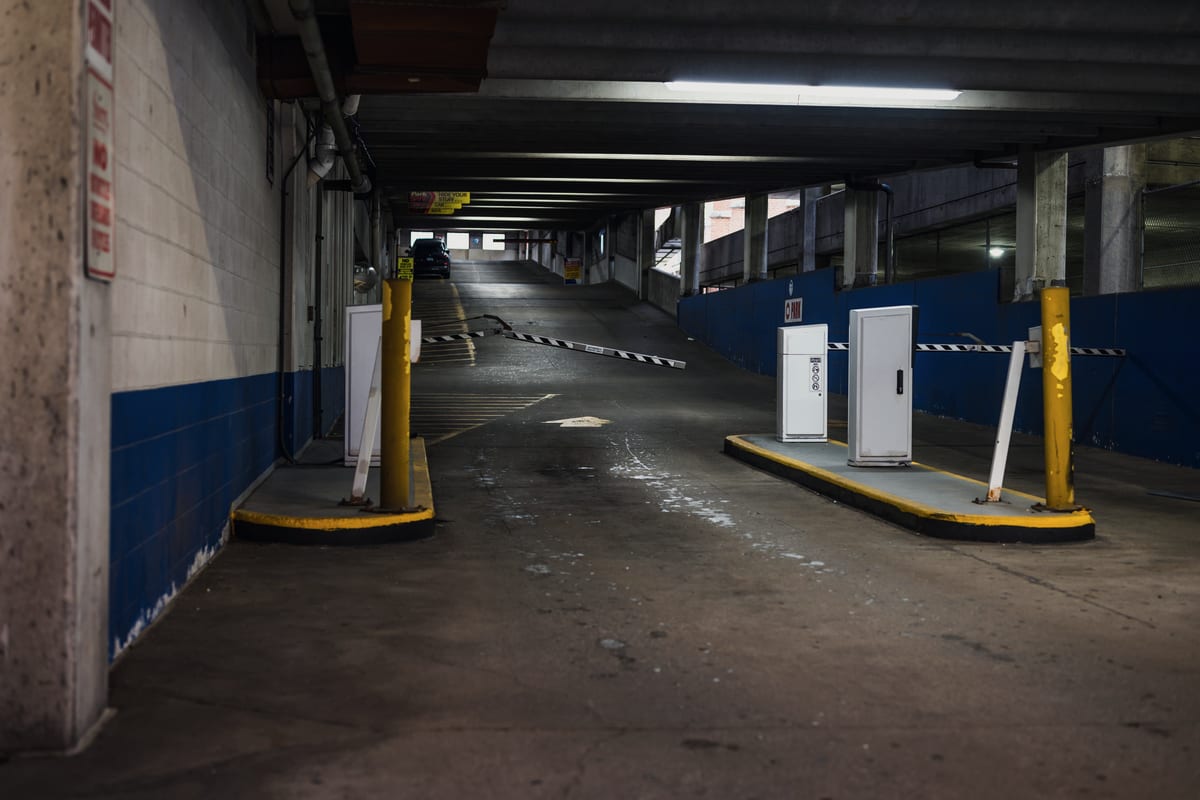
What the rules allow, and why it depends on whose land it is
The rules follow the land. Local authorities in England and Wales enforce on the public road and in their own car parks under Part 6 of the Traffic Management Act 2004. On private land a parking charge is contractual rather than a statutory penalty, and Scotland runs a separate regime of its own.
Start with the public road. Councils in England and Wales enforce there, and in the parking places they provide themselves, under Part 6 of the Traffic Management Act 2004, titled civil enforcement of traffic contraventions. That Part reaches roads and authority provided parking places. It does not reach private land, and that is where most of the confusion in this subject begins.
On private land the footing changes. What a driver receives there is a contractual charge rather than a statutory penalty, so it is neither a fine nor a penalty charge notice. What is statutory is the route to the registered keeper, set out in Schedule 4 of the Protection of Freedoms Act 2012. Keeper details from the DVLA are also restricted to accredited operators, a bar our guide to choosing a car park management company covers in full, and one to settle before a site goes live.
On the ground, the checks that support a charge and the evidence behind it are handled through the ranger and enforcement app, so what happened at the site is recorded while it happens rather than written up afterwards. Scotland is its own regime with no Part 6 equivalent, and Northern Ireland is separate again. An operator with sites across the UK cannot assume one rulebook covers all of them, and neither can a supplier.
One more thing to plan for. A government code for private parking has been on the way for years without arriving, a story our supplier guide tells in full with the dates, and the caps operators work to today come from the industry codes, not from statute. A system that keeps a clean record of every read, payment and charge will not need rebuilding when the government version finally lands.
See the layers working on a real site
Book a short walkthrough with our team, from the first plate read to the monthly report.
Book a demo →What an Irish site has to get right
In Ireland clamping is regulated by the Vehicle Clamping Act 2015 and the regulator is the National Transport Authority. Sites must display prominent signs stating that clamping operates and setting out every charge. The maximum for a clamped vehicle at a non statutory clamping place is €125, and operators must run a free appeals procedure.
An Irish site owner has a checklist here rather than a principle to interpret. The Act covers clamping and relocation at statutory clamping places and non statutory ones, which takes in private sites such as shopping centre and apartment car parks. The charge limits come from the Vehicle Clamping and Signage Regulations 2017, which also provide that no premium or additional fee, for any reason, may be applied on top of the relevant charge.
Signage does much of the work. Section 11 requires prominent signs, visible to a driver bringing a vehicle in, stating that clamping is in operation and specifying the release charge, any relocation charge and any further charges. Section 20 requires the operator to run an appeals procedure, consider an appeal within 21 days, and charge nothing for making one. The National Transport Authority's Clamping Code of Practice, in effect since 1 January 2023, is the reference to keep beside the Act.
Scope is worth being precise about. What the Act regulates is clamping and relocation, and the signage, charge and appeal duties above all attach to those. Parka builds to that same standard across a whole site, because plain signage, a published charge and an appeals route that works are what make a site easy to explain, whichever part of it a driver asks about.
Where the money goes
Local authority parking income in England and Wales is ring fenced by law. Section 55 of the Road Traffic Regulation Act 1984 makes a council account for it separately, and any year end surplus may only go to a closed list of purposes, beginning with providing and maintaining off street parking. A surplus itself is lawful.
It is a common misreading that a council may not run a surplus on parking. It plainly may. What section 55 restricts is where that surplus goes afterwards, and there is a condition worth knowing: the transport, road and environmental purposes only open up once the authority judges that more off street parking would be unnecessary or undesirable. A surplus can also go towards another authority's off street parking.
Scotland's version of the same section is narrower, limited to public passenger transport and to highway or road improvement. Either way the principle holds. Parking income is not general revenue, it is committed before it is collected.
The same logic applies commercially on a private site, without a statute to enforce it. Parking income pays for the resurfacing, the lighting, the drainage and the charging hardware a site would otherwise keep deferring. That last one grows every year. The Department for Transport counted 119,080 public electric vehicle charging devices in the UK as at 1 April 2026, of which 27,372 were rated rapid or above, and a car park hosting any of that needs a revenue line to pay for the install.
Parka runs sites in Iceland where this is the whole point. At visitor destinations remote enough that no other funding was going to arrive, the parking income pays for the paths, the facilities and the protection of the place itself. Putting the money back into the ground is the whole reason for collecting it, and the reporting layer is what lets an operator show that it happened.
Which layers does your site actually need, and what does it cost
Which layers a site needs depends on what the site is. A small car park may want only a camera and a way to pay, while a busy public site wants guidance, access control, enforcement and reporting together. Setup costs vary widely with scope, and Parka can structure the whole thing as a rental, a revenue share or a purchase.
Parka works with operators in whatever way suits them, and the funding structures are laid out plainly in our piece on car park management with no upfront cost. If the idea of a big install bill is what has kept smart parking off your list, that is the conversation to have with our team, because the model can be built to offset the setup.
Doing all of it alone puts the whole spread of install and running costs on your own desk: the cameras, the barriers, the signage, the software and the people to run them. That is the reason so many operators would rather share the cost of a site than carry it, and our ANPR system cost guide takes the figure apart component by component so you can see exactly where the money goes.
What a site needs comes down to type. A small staff car park often wants a camera at the entrance and a gate behind it. A hotel wants guidance and payment built around guests who are not thinking about parking at all. A hospital needs enforcement that keeps turnover honest for the people who need a space most. A council site tends to want the full stack, so income and enforcement are both straightforward to account for. A visitor attraction needs guiding and reporting, for the few days a year it is genuinely full.
Whichever layer a site starts with, they all feed the same operator platform, so the picture sharpens as the system grows. Income that was previously guessed at pays for the resurfacing and the lighting that kept being put off, staff stop chasing paper, and at the sites that need it most, a car park in the middle of nowhere earns enough to keep the place it serves open.
Common questions
Do I need cameras and barriers, or is one enough?
Either can work, and they can also run together. An open site can operate on camera reads alone, checking payment against the plate without a gate. A site that needs certainty at the point of entry, such as a staff car park or a secure building, usually adds a barrier as well. They are complementary rather than a choice between old and new.
Is smart parking only worth it on large car parks?
No. A small site can get most of the value from a single camera and a way to pay, and add guidance or enforcement later if it needs them. The test is not the number of spaces, it is whether the operator currently has an accurate live picture of what happens on the site.
Can a system run without drivers downloading an app?
Yes. A kiosk on site or an account arranged in advance takes payment just as well, and a site can offer both so a driver can choose. The camera read opens the record either way, so the app is one route to paying rather than the only one.
How long does it take to get a site up and running?
It depends on the site: how many entrances there are, whether new cabling or power is needed, and which layers are being fitted. A single camera and a payment method can go live quickly. A full site with barriers, signage, charging and enforcement takes longer to plan, install and commission properly.
What happens to the data a smart parking system collects?
It is aggregate and operational: the pattern of arrivals, stays and payments across a site, used for planning, staffing and reporting. It exists so an operator can run the car park better and show where the income went. It is not there to follow any individual driver around.
More insights
See what your car park is really doing
Book a 30 minute demo and we will show you the platform and your numbers.