
Car park management systems: what they do, what they cost, and why one platform beats three vendors
A car park management system is the combined technology that runs a car park end to end. ANPR cameras read plates at entry and exit, drivers pay by app, phone or kiosk, and a cloud dashboard shows occupancy, revenue and compliance in real time, replacing paper tickets and gatehouse staff.
10 July 2026 / 7 min read
By Tim Marting, Head of International Business Development

What a car park management system actually includes
A car park management system includes ANPR cameras at entry and exit, a payment layer covering app, phone and kiosk, a permit and whitelist database, an enforcement workflow for parking charge notices, and a cloud dashboard reporting occupancy and revenue, all built from one shared record of each vehicle's visit.
For decades, a car park system meant a barrier, a ticket machine and someone in a booth. That equipment controlled access. It told an owner nothing about how full the car park was at 3 pm on a Tuesday, or which vehicle overstayed by 40 minutes.
A modern system starts from a different premise. The plate is the credential. ANPR cameras at entry and exit read every plate, match it to a payment or permit, and log the visit. No ticket to lose and no queue at the exit while a driver hunts for change.
Behind that sits the part most buyers underestimate: the software. Payment processing, permit management, signage compliance, appeals handling and live reporting all need to talk to each other. A system that cannot connect entry data to payment data to enforcement data is three separate products wearing one name.
That distinction holds whether the site is a 30 space hotel car park or a 500 space retail park. The value sits in the connected record of each visit, not the number of cameras on the wall.
How a car park management system works, from entry to exit
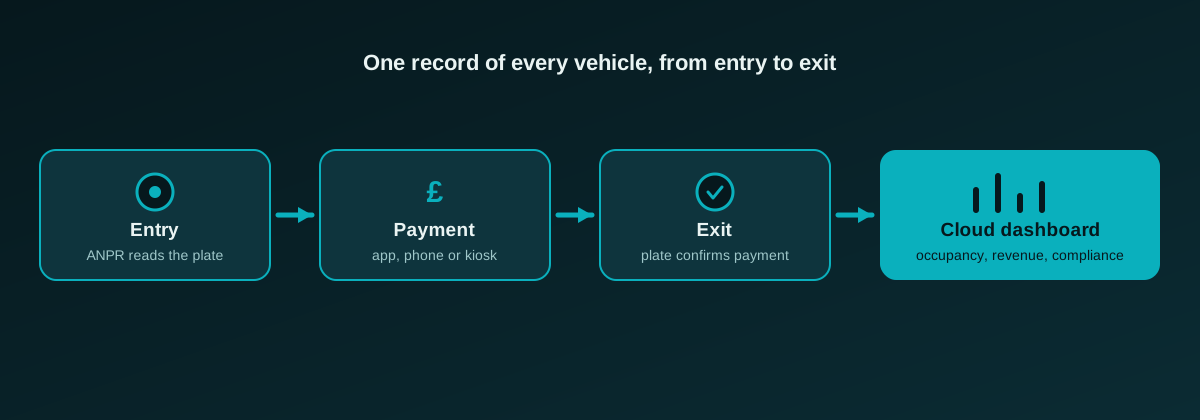
A vehicle enters and an ANPR camera reads and logs its plate. The driver pays by app, phone, card or pre booking, or presents a permit. On exit, a second camera confirms the plate and checks payment. Anyone who has not paid or overstayed is sent a parking charge notice.
Picture the exit lane at 6 pm on a Friday, when everyone leaves at once. Under the old model, that is a queue of cars waiting for a machine to read paper tickets one at a time. Under an ANPR system, the barrier lifts automatically the moment the plate is recognised, or the site runs without one entirely. Either way, payment was matched to the plate before the driver got back to the car, so nobody waits.
Payment is where most systems now compete. Pay by plate through an app, a phone line, a kiosk on site or booking in advance all feed the same record, so a driver who paid online at lunchtime is treated exactly the same as one who taps a card on the way out.
Non payment and overstays are not chased by a warden with a notebook. The system flags the vehicle automatically and a parking charge notice goes to the registered keeper, the enforcement route used across the UK, triggered by data rather than a person walking the rows.
What a car park management system costs
Honestly, it depends. The gap between a simple single entrance site and a large public car park with multiple lanes, payment and enforcement is an order of magnitude, and the software that runs it month to month sits on top of either figure. Parka shapes the cost around the site rather than a price list, so the number that matters is the one built for your layout.
Ask three suppliers what a system costs and you will get three very different answers, because the total depends on so much: how many entry and exit points need cameras, the type of camera, how many payment options you offer, whether you want barriers, kiosks, digital signage or EV charging, whether enforcement is included, and the size and layout of the site. We can build in any of these, because Parka handles the whole of parking rather than one slice of it. A small single entrance site is a modest project. A large multi lane public car park with barriers, payment kiosks and full enforcement is a serious capital investment, and the monthly software and support to run it all sits on top.
This is exactly why we do not hand operators a fixed price list. How the money side works is a subject of its own, and we have written it up plainly in our guide to how free car park management models actually work and the fuller ANPR system cost breakdown. The short version: Parka aligns the structure with the site, and most operators keep their capital for the things only they can spend it on. If building all of this yourself looks daunting or expensive, that is the point of working with a partner. Talk to our team and we will shape the cost around your site.
| What drives the cost | Why it matters |
|---|---|
| Entry and exit points | Each lane needs its own camera and controller, so more lanes means more cost. |
| Camera type | Dedicated ANPR cameras cost more than standard ones but read plates far more reliably. |
| Payment options | Adding payment machines and app, phone and kiosk options raises the spend but lifts revenue. |
| Barriers and access control | Optional physical control for secure or staff sites, part of the mix wherever an operator wants it. |
| Kiosks, signage and EV | Payment kiosks, digital wayfinding and EV charging can all be built in, each adding to the spend. |
| Enforcement | A full parking charge notice workflow adds cost and recovers revenue that was leaking. |
| Site size and layout | Cabling, signage and power across a larger site all add up. |
| Software and support | The cloud platform that runs it is an ongoing monthly cost, not a one off. |
Not sure where your site would land?
Book a 30 minute demo and we will walk you through the platform and shape the numbers around your car park.
Book a demo →How a car park management system pays for itself
A 100 space car park at 80% occupancy, charging even £2 a vehicle a day, brings in over £58,000 a year, much of it currently uncollected or unenforced. Automating a manned gatehouse saves £25,000 to £40,000 a year more, so the return builds quickly.
The uncomfortable question for most site owners is not whether to install a system, but how much has already been lost by not having one. A car park that relies on an honesty box, an occasional warden, or nothing at all is leaking revenue every single day, quietly enough that nobody notices until someone finally counts.
That figure is deliberately conservative. It assumes each space fills just once a day, whereas a busy town or retail site turns its spaces over several times, so the real recovery is usually higher. And none of it is new money won from new customers. It is revenue the car park was always owed, simply captured reliably instead of slipping through the gaps.
Staffing is the other side of the ledger. A manned gatehouse does not only cost wages, it costs holiday cover, sickness, and the odd honest mistake at 11 pm on a Saturday. Automating that role removes a fixed overhead that would otherwise return every year the site runs.
One connected platform or several separate systems
Across the industry, dedicated ANPR cameras cost more upfront, about £3,000 to £5,000 against £800 to £1,500 for a standard camera, but a single connected platform removes the need for a separate server and separate software licences, so over 5 years it typically costs less and breaks less often than three stitched together vendors.
It is tempting to buy the cheapest camera, a separate payment app and a third company for enforcement, and assume they will work together. They rarely do, not smoothly, and the integration risk lands on the site owner, not the vendors.
Over 5 years, one platform that handles cameras, payment and reporting from a single record is usually the cheaper option, and certainly the more reliable one. Fewer vendors means fewer places for a plate to get lost between systems.
Barriers still have their place, at a secure site, a staff car park or anywhere physical control matters, and a good platform offers them as part of the mix rather than treating them as the whole system. The point is not to remove the barrier, it is to stop the barrier being the only thing the car park knows about a vehicle.

How to choose the right car park management system
Choose on ANPR accuracy, the range of payment options offered to drivers, real time occupancy and revenue reporting, and an enforcement process that is fair rather than confrontational. Decide who owns policy and enforcement before signing anything, because payment machines alone can turn a £15,000 access system into a £30,000 site.
Start with accuracy. An ANPR camera that misreads plates in rain or at night creates disputes, refunds and angry calls, and no dashboard fixes a camera that cannot do its one job.
Check payment options next. Drivers expect to pay by app, phone, card or in advance, and a system that forces one method onto everyone will lose some of them.
Ask to see the reporting before buying, not after. Occupancy and revenue data that updates in real time is what turns a car park from a cost centre into an asset an operator, a landowner or a council can actually manage. Get the choice right and a car park stops being a line item and starts running like the asset it always was.
Common questions
What is a car park management system?
The combined hardware and software that runs a car park, ANPR cameras at entry and exit, driver payment options, permit and enforcement workflows, and a cloud dashboard showing occupancy and revenue in real time.
How much does a car park management system cost in the UK?
It depends heavily on the site, and any single figure quoted before a survey is a guess. Lane count, camera choice, payment options, barriers and enforcement each move the total, and the monthly software sits on top. Our ANPR car park system cost guide on this site sets out the full breakdown; with Parka the structure is shaped around the site itself.
Do you still need a barrier?
Only if you want one. Many sites run open with ANPR alone, while others keep a barrier for security or staff control and simply automate what raises it. A good platform supports both.
How quickly does it pay for itself?
Faster than most owners expect. A 100 space car park at 80% occupancy, charging even £2 a day, brings in over £58,000 a year, and automating a manned gatehouse saves £25,000 to £40,000 more. How the cost is structured is up to you, which is what makes the payback question a design question too.
More insights
See what your car park is really doing
Book a 30 minute demo and we will show you the platform and your numbers.