
What Are ANPR Cameras and How Do They Work?
A car turns into the entrance of an ordinary car park. Above the lane, a camera reads the number plate in about the time it takes the driver to slow down. No window drops, no ticket is pulled, no card is tapped. By the time the vehicle reaches the barrier, or passes the point where a barrier would be, the site already has a record of the visit. This article explains what an ANPR camera actually captures, how the read happens in a fraction of a second, what operators across different industries use it for, whether it is lawful, how accurate it really is, and what a full setup costs to run.
17 July 2026 / 8 min read
By Tim Marting, Head of International Business Development
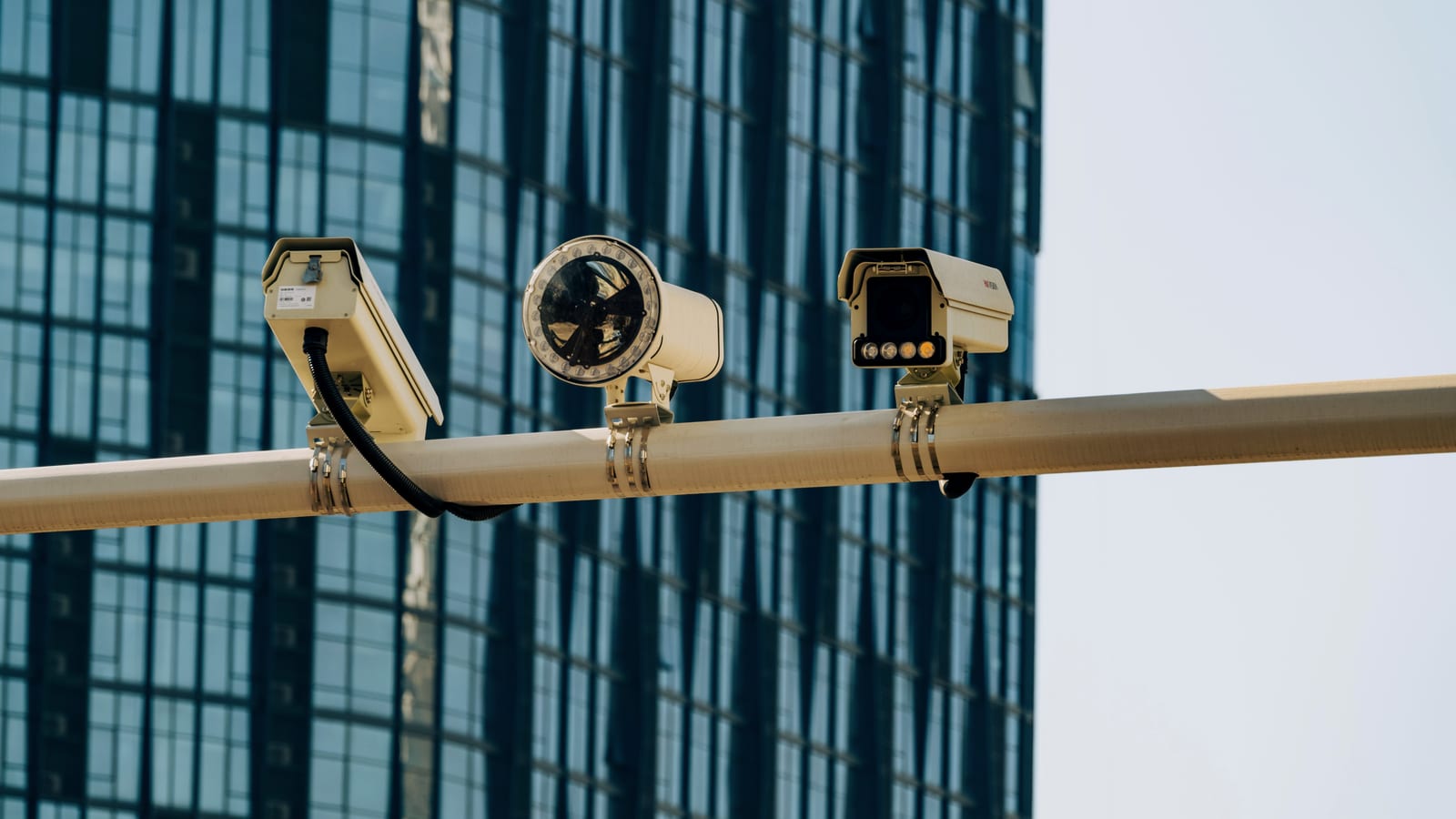
What is an ANPR camera?
ANPR stands for Automatic Number Plate Recognition. An ANPR camera reads a vehicle's number plate and converts it into text, so a site can record or check a vehicle without a person on hand and without a paper ticket. It is a camera and a piece of software working together, not a camera alone.
Every read starts with 3 separate captures. The camera takes a wide picture of the whole vehicle, a close picture of just the plate, and then the plate again as plain text, the letters and numbers a person could type into a search box.
That third capture, the plate as text, is what makes everything else possible. Once a plate is text rather than a picture, software can compare it against a list in a fraction of a second, something no person watching a screen all day could do as reliably.
ANPR cameras sit at the lane, and they work whether the site has a barrier, a kiosk, or nothing more than the camera itself and a payment app behind it.
How do ANPR cameras work?
An ANPR camera reads a plate in a set sequence: it detects the plate, corrects the angle, checks the brightness, separates each character, then reads them with optical character recognition and checks the result against a valid plate format. Cameras use infrared light to read plates day or night, and the whole process takes roughly 250 milliseconds.
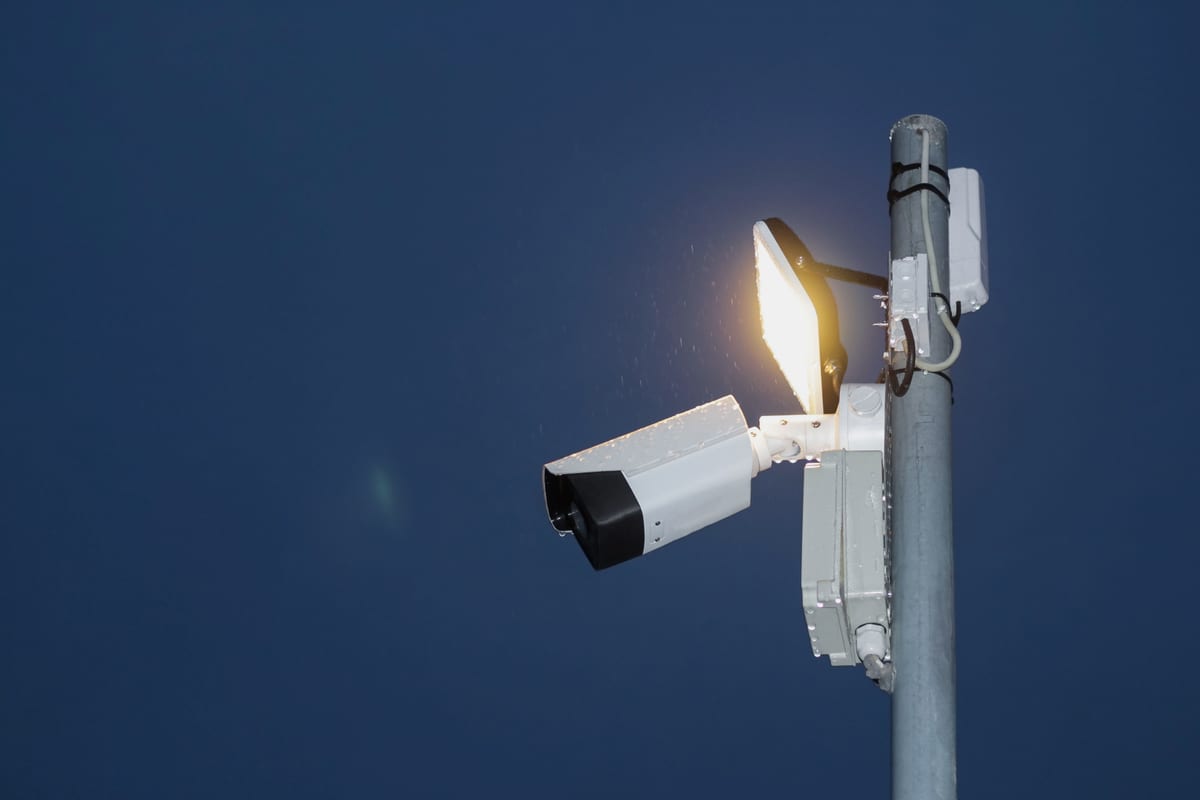
Picture the lane at night. There is no visible flash, because the camera is reading in infrared, a light wavelength people cannot see. UK number plates are made to bounce that light straight back at the camera, so even in the dark or against headlight glare, the plate comes back sharp.
The software then works through the image like a proofreader. It finds the plate inside the wider picture, straightens it if the car came in at an angle, evens out the brightness, and splits the plate into individual characters before it reads each one.
A single frame is never trusted on its own. The system reads several frames as the car moves through the lane and checks that they agree, then checks the result against the format a real UK plate should follow, before it settles on a final answer.
Once that plate exists as text, the system checks it against a list: a permit list, a paid list, a staff list, or simply a record of when the vehicle came in. The result decides what happens next, whether that is a barrier lifting, a visit logged, or a charging session starting.
What do operators use ANPR cameras for?
The same plate read supports different jobs on different sites. Car parks use it to record entry and exit without paper tickets. Retail and hospitality sites use it to give customers a free stay. Access control admits only listed vehicles, and EV charging or car wash sites link a plate to a membership.
A car park is the clearest example. The plate becomes the record of the visit, entry to exit, and the site can run barriers and access control alongside the cameras as part of a wider car park management system, or go barrier free, depending on what the operator needs.
Access control works on the same read, just with a different list. A staff car park, a residents' site or a permit scheme only needs an answer to a single question: is this plate on the list. If it is, the vehicle goes straight in.
At an airport, the same principle keeps a drop off lane moving rather than letting cars queue, matching the pace of departures rather than the pace of paperwork. The same logic runs car wash subscriptions, where a plate ties straight to a membership so a driver never has to present anything at all. Where a plate alone is not enough, say a driver choosing between a car wash bay and the main car park, the Parka app lets them pick their site directly, so the read and the driver's own choice work together.
For the operator, the most useful output is not any single vehicle. It is the pattern across all of them. How busy is the site? When do the peaks land? How long do people typically stay? Answering those properly needs live reporting pulled from every read, not a count taken once a month.
| Use case | What the read enables |
|---|---|
| Car parks | Entry and exit recorded automatically, so a site can run barrier free if the operator wants |
| Access control | Only vehicles on a permit, staff or resident list are let in |
| Retail and hospitality | A free stay for customers, managed fairly by how long a vehicle is actually there |
| EV charging and car wash | The plate links a vehicle to a membership or session, or a driver picks the site in the app |
| Operator planning | Aggregated data shows how busy a site is, when the peaks land, and how long people stay |
See ANPR working on a real site
Book a short demo and watch a plate read happen in real time, on the kind of site you run.
Book a demo →Is ANPR legal in the UK, and how is the data protected?
Yes, ANPR is lawful in the UK when it is run properly. A number plate captured this way counts as personal data, so an operator needs a lawful basis, a Data Protection Impact Assessment, clear signage naming the recording, and a policy to delete data once it is no longer needed.
The Information Commissioner's Office treats a number plate the same as a name or a face once it is captured for identifying a vehicle or its keeper. That single point shapes everything else about running ANPR responsibly.
Before switching cameras on, the ICO expects an operator to complete a Data Protection Impact Assessment, working through why the cameras are needed, what data they collect, and how long it is kept. It is a working document, not a formality, and a properly run site can point to it.
Signage matters just as much as the paperwork. People need clear, visible notice that ANPR recording is happening, and where possible who is running it. Retention follows the same discipline: data is kept only as long as there is a genuine reason to keep it, then deleted.
Chasing unpaid parking is where operators most often need help from the DVLA, and access is deliberately narrow: keeper details are released only with reasonable cause and only to accredited operators, a bar our guide to choosing a car park management company explains in full. The unauthorised parking on private land article covers how the process runs in practice.
None of this is about watching people. Handled properly, ANPR data describes traffic, not individuals going about their day, and the DPIA, the signage and the retention limit are what keep it that way.
Set up ANPR the right way
Talk to Parka about signage, a DPIA and a lawful setup that stands up to scrutiny.
Book a demo →How accurate are ANPR cameras?
Accuracy depends on conditions. Clean, well lit tests of ANPR systems have reported accuracy in the range of 95% to 98%, but real world conditions, a moving vehicle, a dirty plate, a bad angle or poor light, can pull that below 70% in harder tests. Good installation is what protects the read.
The number worth remembering is not a single percentage. It is the gap between a clean test and a real lane. Benchmark tests run in good conditions produce strong results, but a live car park throws in rain, headlight glare, mud on a plate and cars arriving at odd angles, often all at once.
Infrared lighting and the retroreflective plate close most of that gap before software even gets involved, because the camera is working with a clean, bright image rather than a dim, washed out one. Averaging several frames rather than trusting a single shot closes most of the rest.
What is left comes down to installation. Camera height, angle, distance from the lane and lighting all affect the read, and getting those right is an engineering job, not a guess. Parka takes on that part of the work when it fits a site, rather than leaving an operator to work it out from a manual.
What does an ANPR setup cost, and how does Parka fit a site?
A full ANPR setup, covering cameras, barriers, kiosks and software, spans an order of magnitude between a small site and a large one, before any monthly software cost; the cost guide on this site prices each part. Parka offers several ways to fund it, so the install rarely lands as one upfront bill.
Parka works with operators in whatever way suits the site, and the funding structures are written up plainly in our guide to how free car park management models work, so the market range above rarely describes what leaves an operator's account.
A full build across a large site, several lanes, barriers, kiosks and signage, will land at the higher end of that range. A single entry camera on a small site lands much closer to the bottom. Sourcing cameras, writing the software and handling the legal side in house asks a lot of any operator whose day job is running a venue, which is exactly why most choose a partner instead.
A typical site draws from the same short list: ANPR cameras at the lane, barriers and access control where the site needs physical control, kiosks for visitors who would rather pay on site, digital signage to show space and pricing at the entrance, and EV charging for the growing number of drivers who need it. Parka supplies and supports the whole list, so an operator deals with a single partner rather than several separate suppliers.
If a figure looks out of reach, that is worth a conversation rather than a reason to rule ANPR out. Talk to the team about a model that offsets the setup, rather than assuming the number on a spec sheet is the number you will actually pay.
| Component | What it covers |
|---|---|
| ANPR cameras | The entry and exit read that identifies each vehicle |
| Barriers and access control | Physical control for staff, permit or secure sites |
| Kiosks | Pay on site for visitors without the app |
| Digital signage | Live pricing, space counts and directions at the entrance |
| EV charging | Charging points linked to the same plate read or a membership |
Talk to Parka about your site
Book a short call and get a setup that matches your site and your budget.
Book a demo →Common questions
What does ANPR stand for?
ANPR stands for Automatic Number Plate Recognition, the technology that reads a vehicle's number plate and turns it into text so a site can identify or check a vehicle automatically.
Do ANPR cameras work at night?
Yes. ANPR cameras use infrared light to read a plate, and UK number plates are made to reflect that light straight back, so the camera gets a clear image in daylight, darkness or headlight glare.
Is ANPR the same as CCTV?
No. CCTV records general footage for people to review. ANPR is built to find a specific plate, read it as text and check it against a list automatically, in roughly 250 milliseconds per vehicle.
Do I need permission to use ANPR on my car park?
You do not need permission as such, but you do need a lawful basis, a privacy assessment completed before the cameras go live, and clear signage telling people recording is happening, in line with UK GDPR and ICO guidance.
Can ANPR run a car park without barriers?
Yes. Once a plate is read on entry and exit, that record alone can manage the stay, so a site can run barrier free if the operator wants it to. Many operators still pair ANPR with barriers on secure or staff sites, where physical control matters most.
More insights
See the platform on real data
A 30 minute walkthrough shaped around how your sites operate, with your questions leading it.