
Car wash subscriptions: how number plate recognition runs unmanned memberships
A car wash subscription is a monthly plan that lets a driver wash their car a set number of times, or without limit, for one recurring fee. Number plate recognition, or ANPR, is what makes it work without staff, tickets, or apps at the point of entry: the camera reads the plate and checks it against an active plan.
8 July 2026 / 7 min read
By Tim Marting, Head of International Business Development
What a car wash subscription system actually is
A car wash subscription system is the combination of a membership plan and the technology that recognises paying customers automatically. Instead of a ticket or a code, the vehicle itself, through its plate, becomes the credential. It covers the plans, the payment handling, and the entry technology working together as one system.
Most operators start with the wash itself, tunnel, in bay automatic, or a mix, and then add a subscription layer on top. The technology sits between the customer and the wash, not inside it, which is why it can be added to an existing site as easily as a new one.
A subscription only works if entry is quick and reliable. Nobody wants to queue behind a driver fumbling for a code, and staff on a gate defeats much of the point. Recognition removes that friction and lets the wash run the way a subscription business should, low effort per visit, high volume over a month.
The customer side matters just as much as the hardware. An account, a plan, a way to pause or upgrade, that is what turns a single visit into an ongoing relationship. The cameras read the plate; the plan and the billing are what keep the customer coming back.
How number plate memberships work, from sign up to wash
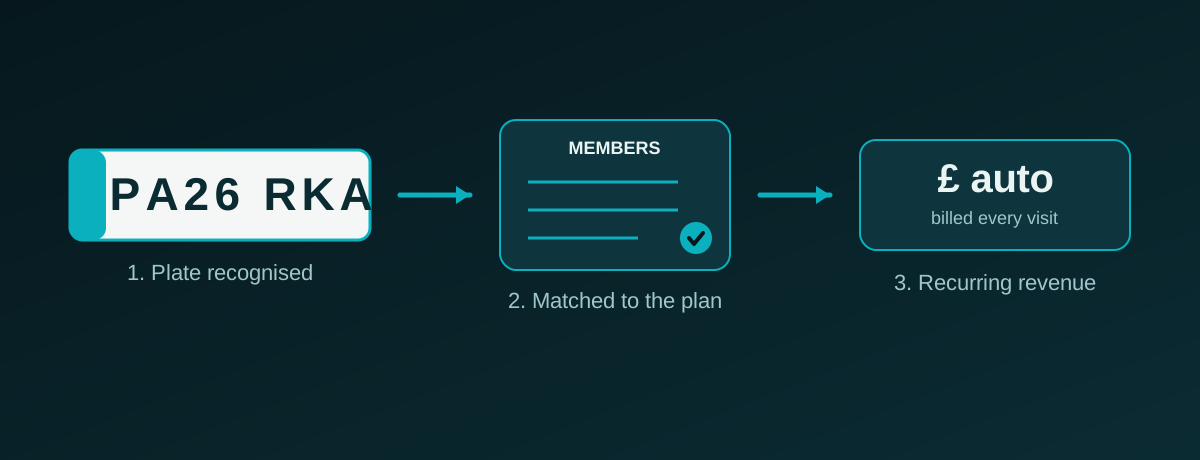
A driver signs up online or in person and registers their number plate against a plan. From then on, a camera at the entry reads the plate on approach, matches it to that plan, and lifts the barrier or opens access, with no ticket, tag, or app tap needed.
Sign up is the only manual step in the whole process. After that, the plate does the work. It cannot be lent to a friend or used by two cars on the same plan, because the system is checking a specific registration, not a card or a code that anyone could pass along.
There is also an app route for drivers who prefer one. In the Parka app, a member can simply select the car wash they want, and the visit is handled the same way behind the scenes, matched to their plan and logged automatically.
Behind the scenes, every read is logged. A member can see their own visit history in their account, and if an operator runs more than one site, the same membership can be recognised at each of them without the customer doing anything different. One plate, one plan, wherever they turn up.
Renewals and payment failures are handled the same way. If a card expires or a plan lapses, the system knows before the driver arrives, rather than leaving an awkward moment at the entry for someone to sort out on the spot.
Why memberships are the most valuable revenue a wash has
Membership revenue is predictable in a way pay per visit washes never are. Industry figures for 2025 put total churn at around 7% to 8%, with roughly 91% of members saying they intend to keep their subscription, and membership revenue growing about 10% year over year, retention on a par with streaming or gym memberships.
The reason memberships beat single visit trade is not just about steady cash, it is about what steady cash lets an operator do. A wash with a known monthly floor can plan staffing, stock, and maintenance around real numbers instead of guessing based on the weather.
Take a modest example. 300 members on a £20 monthly plan works out to £72,000 a year in predictable revenue, before a single extra car turns up on top. Real membership counts and prices vary by site and region, but the shape of the maths does not change: a base of paying members changes what the business is worth.
That is also why buyers and lenders look at subscription numbers differently to footfall numbers. A wash that can point to a stable membership base, not just busy Saturdays, is showing recurring revenue, and recurring revenue tends to get valued more highly than trade that has to be won again every time.
Running the wash unmanned, around the clock
An ANPR controlled wash does not need a person on the gate because the camera and the software make the access decision. That means in bay automatic sites can open early, close late, or run through the night, earning outside the hours a staffed site would otherwise sit idle.
Unmanned does not mean unattended in every sense, it means the entry decision does not need a human standing there to make it. Cleaning cycles, chemical levels, and equipment still get checked on a schedule, recognition simply removes the need for someone to greet every car and take a payment by hand.
The late night and early morning hours are where this earns its keep. Shift workers, an early flight, a car needed clean before a start time nobody else is awake for, that demand exists whether or not a site is staffed to catch it.
It also changes the risk of opening longer hours. Extending staffed hours means extending a wage bill against uncertain demand. Extending unmanned hours mostly means extending the hours the camera and software are already switched on, which is a very different calculation for an operator to make.
What a plate based car wash costs, and how Parka works with you
There is no single answer, cost depends on how many bays or lanes you are running, what cameras and software you choose, and whether you want barriers or kiosks alongside recognition. Parka works around whatever suits the operator, so the structure follows the wash rather than a price list, and few sites need to treat it as a capital project.
Every site is different, which is why we do not quote a flat number and expect it to fit. A single in bay automatic wash with one camera is a different project to a multi lane site running memberships across several locations, and the plan should reflect that rather than force a standard package on it.
How you pay for it is just as flexible as what you install. Some operators prefer to rent the hardware and software and keep cash free for the wash itself. Others buy the system outright. And some would rather we take a slice of each wash transaction, or charge one flat monthly amount, so cost tracks revenue instead of arriving as a lump sum before a single member has signed up.
That last approach is deliberate on our part. We would rather earn when your wash earns than load an operator with cost up front. The right structure depends on your site, your cash position, and how you like to run the business, which is exactly the sort of thing worth talking through with our team rather than guessing from a price list.
| Factor | Why it matters |
|---|---|
| Bays or lanes and cameras | Each entry and exit point needs its own camera coverage, so more lanes means more hardware to plan for. |
| Camera type and read accuracy | A camera built for speed and weather reads plates reliably in rain, low light, and at an angle, which is what keeps genuine members moving. |
| Membership and payment software | This is what turns a plate read into a working business, matching reads to plans, handling billing, and giving members an account to manage. |
| Barriers and access control | Optional, and useful where an operator wants a physical stop as well as recognition, barriers sit alongside ANPR rather than replacing it. |
| Kiosks and signage | A kiosk or clear signage helps non members pay for a single wash and helps everyone understand what the site is doing with their plate. |
| Integration with the wash controller | The recognition system needs to talk to whatever already runs the wash, so compatibility with existing equipment affects setup. |
| Multi site and cloud connectivity | A cloud connected setup lets one membership work across several locations and gives an operator one view of all their sites. |
| Ongoing support | Someone needs to be on hand if a camera misreads or a payment fails, so the level of support behind the system is part of what you pay for. |
Wondering how this would work on your site?
Book a 30 minute demo and we will walk you through the platform and shape a model that fits your wash.
Book a demo →Choosing a system, and doing right by data protection
Choose on read accuracy in real conditions, how flexible the membership and payment options are, and how clear the reporting is, not on price alone. Number plate reading also brings the standard UK privacy groundwork with it, the same duties any camera run site carries; the steps are manageable and our ANPR camera guide walks through them in full.
Accuracy is the first thing to test, not the last. Ask how a system performs on a dirty plate, a motorbike, a van with a plate mounted off centre, or in heavy rain, because those are the everyday conditions a wash actually operates in, not a clean demonstration plate on a sunny afternoon.
After accuracy, look at flexibility. Can the system handle several plan tiers, pauses, upgrades, and both members and occasional customers at the same entry point? Reporting matters too, an operator should be able to see visit patterns, active members and revenue without having to ask someone else to pull the numbers.
The data protection side is not a reason to hesitate, it is a reason to work with a partner who has done it before. A DPIA, proper signage telling drivers a camera is in operation, and a clear lawful basis for holding plate data are expected practice, and a supplier who builds this in from the start saves an operator from working it out alone.
Common questions
How much does a car wash subscription system cost?
There is no fixed figure, cost moves with the number of lanes, the cameras chosen, and the software behind it. Parka works with operators however suits them best, and the funding models guide on this site explains the structures in plain terms; most washes get started without a capital project.
Do you need barriers for a subscription car wash?
Not necessarily, recognition alone can control access, but barriers have their place. A physical barrier gives an extra layer of certainty at busy sites, or where an operator simply prefers it, and it is one of several options we offer alongside kiosks and signage, chosen to fit the site.
Is ANPR at a car wash allowed under UK data protection rules?
Yes, when it is done properly. The ICO expects the same privacy groundwork for a wash camera as for any ANPR site: an assessment before the cameras go in, clear signage telling drivers a camera is in use, and a lawful basis for holding the data. Done this way, plate recognition at a car wash operates comfortably within the rules.
What happens if the camera cannot read a plate?
A good system has a fallback built in, so a paying member is never left stuck at the entry. That usually means a short code the driver can enter, a call button, or a manual check by whoever is on site, so a misread plate slows nobody down and never turns into a lost customer.
More insights
See what your car wash is really doing
Book a 30 minute demo and we will show you how subscriptions and plate reads run day to day.