
The Single Code Deadline: What 31 December 2026 Still Requires
Does the 31 December 2026 deadline in private parking's Single Code mean every sign on your land has to be replaced before New Year? Operators and landowners keep asking, and since April 2026 the honest answer is no. A quiet revision to the Code's foreword moved the item everyone was budgeting for onto a different timetable. What is left on the list is cheaper, slower and easier to miss, because most of it is paperwork, process and evidence, and none of it photographs well on a site visit.
1 September 2026 / 9 min read
By Tim Marting, Head of International Business Development
What the transition table sets out
The Code, published in June 2024, staged its obligations: from 1 October 2024 new sites comply in full, reporting duties begin and new self ticketers register with their trade association; by 31 December 2026 every aspect applies to every site.
The Single Code is the rulebook both trade associations, the BPA and the IPC, now enforce on their members, and its transition table is one page long. June 2024: the Code is published. From 1 October 2024: every new site must comply in full, all reporting obligations in clause 17 apply, and any operator ticketing their own land for the first time must be registered with a trade association. Then the long stop: by 31 December 2026, every part of the Code applies to every site, however old.
Read the table closely and the shape of the transition becomes clear. The October 2024 obligations were the ones an operator could meet from a desk: register, report, apply the new rules to anything newly built. The carve out for existing sites covered signage and the clauses that hang off it, because signs are physical, numerous and expensive to replace across a national estate. Everything that was not physical has been binding for two years.
That last line is the one that matters if your car park was operating before October 2024. The deadline is not the start of compliance. It is the end of the carve out, and for a landowner it is also the date after which ignorance of what your operator is doing on your land stops being an answer, because the Code puts obligations on the relationship between you, not just on the operator.
The April 2026 revision changed what the deadline demands
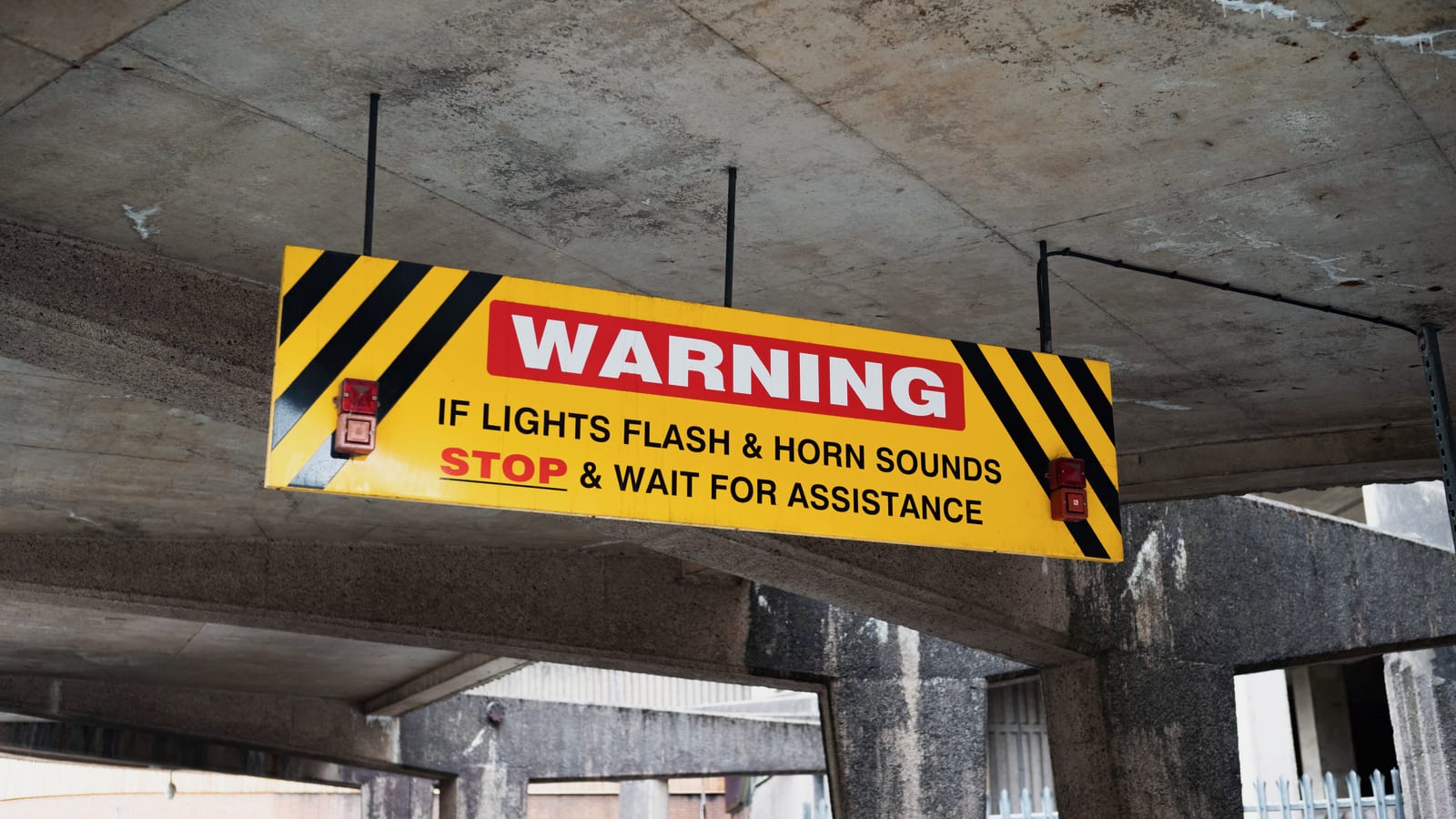
In April 2026 the Code's oversight panel decided that signage already in place before October 2024 no longer has to be updated by the deadline; those updates now wait for the government's statutory code. Signage installed since October 2024 must already comply in full.
This is the part the summaries on page one of a search have not caught up with. The Private Parking Scrutiny and Advisory Panel, which has kept the Code under review since January 2025, revised the foreword on 13 April 2026. The Code had previously required signage in place before October 2024 to be brought up to the new standard. The Panel weighed the cost and the environmental waste of a nationwide refit that might be repeated within a year, and decided to align those update timescales with the requirements the government's statutory code will set when it is laid.
The Panel was explicit that this is not a relaxation. Older signage must still comply with the BPA or IPC code that governed it before the Single Code arrived, and any sign installed from October 2024 onwards must meet the new standard in full. But if your December budget was reserved for pulling compliant enough signs out of the ground, the primary source says you can hold that spend until the statutory wording is final. The money is better pointed at the items still genuinely due, and those are the ones with no visible hardware attached.
Most of the Code is already in force on your site
Charge limits, discount windows, appeals timescales, keying error policies, consideration and grace periods and the clause 17 record keeping duties have applied to every operating site since 1 October 2024, and trade association audits already test them.
Because the headlines fixate on the deadline, it is easy to run a site today as if the Code starts in January. It started two years ago. The £100 ceiling on the charge itself, the reduction of at least 40% for payment inside 14 days, the £60 limit on what can be added when a charge goes unpaid, the ban on issuing more than one charge for the same parking event in a day, the 28 days a motorist has to appeal and the 28 days the operator has to answer, the documented policy for keying errors at payment machines, the minimum consideration and grace periods: all of it has applied since 1 October 2024, and the trade associations audit their members against it at least annually, with random site inspections on top. Enforcement even pauses automatically the moment an appeal reaches the independent appeals service, which means a slow appeals process is not a delay tactic but a growing pile of frozen charges.
The same is true of the duties that never make a headline. Clause 17 requires parking charge records to be kept for 36 months, recording when and where every charge was issued, why, and what became of it. Camera evidence has to pass a manual quality check before a charge is issued. A supplier appointment signed this year should already be built around those duties, because the operator's accreditation, and with it their access to keeper data, depends on passing the audit that tests them.
A four month order of work
Order the remaining work by lead time, not difficulty: first the paperwork that needs other people (landowner authority), then the processes that need registration or drafting (consideration periods, appeals, keying errors), then the evidence trail that needs to run continuously (records and camera checks).
Four months is enough time if the work is sequenced by who has to act, and the slowest items involve people you do not employ.
Paperwork first. Clause 14 requires written landowner authority before charges are issued, covering who the landowner is, a boundary map, how long the permission runs and the terms drivers park under. If the boundary map no longer matches the car park because a corner was fenced off or a bay was added, the letter needs redoing, and landlords, managing agents and estates departments do not turn documents around in a week.
Process second. Annex B requires operators to register the consideration periods they apply at each site with their trade association before issuing a charge, with ten minutes as the reference point and written approval needed for anything shorter. Appeals need a process that actually answers within the 28 days the Code allows, and the keying error policy under clause 6 needs to say in writing how a mistyped registration is identified and cancelled.
Evidence last on the list, but only because it never finishes: it has to run every day from now on. A useful way to pressure test the sequence is to ask, for each item, who signs it off. The landowner file needs a signature from outside your organisation. The registrations and policies need a decision from inside it. The evidence trail needs neither, it needs infrastructure, and infrastructure is the one item on the list that cannot be produced in a hurry the week before an audit. That is the subject of the next section, and it is where the sites that fail audits tend to fail.
Evidence is the part sites underestimate
The Code assumes a site can produce timestamped, quality checked records for three years on request. Most sites cannot, because nothing on the ground is collecting them.
We recently asked a retail outlet park whether they could see how much their EV charging bays actually get used, and whether petrol cars end up sitting in them. The reply talked about plans to improve the site, but no numbers, because there were not any being collected.
That is the default state of a great many car parks, and under the Code it has become a liability. An operator has 28 days to answer an appeal, and the appeals services decided over 67,000 of them in the year to September 2025. Every one of those cases turns on records: the images, the timestamps, the payment data, the site terms in force on the day. A site that collects nothing has nothing to say, and the Code's answer to silence is that the charge does not stand.
Parka builds that record as a natural consequence of running the car park: every read, payment and exit is logged and timestamped as it happens, so the 36 month history clause 17 demands exists without anyone maintaining it by hand, and an appeal is answered from the data rather than from memory. The access control side of the platform is where that trail starts. However a site gets there, the test to apply before December is simple: pick a charge from last month and see how long it takes to assemble the full file behind it, the images, the quality check that was run on them, the payment record, the terms in force that day. If the answer is measured in days, that is the gap the deadline is really pointing at, and it is a gap that shows up twice: once as an audit finding, and once as revenue, because a charge a site cannot evidence is a charge it cannot collect. The same record that satisfies clause 17 is also the first honest picture most landowners ever get of how their car park is used, which spaces earn, which sit empty and what an average stay looks like. Compliance pays for the visibility, and the visibility is worth more than the compliance.
See the record your car park could be keeping
Parka logs every entry, payment and exit as it happens, so the three year history the Code demands builds itself. A ten minute walkthrough shows you what that looks like on a site like yours.
Book a demo →The statutory code arriving behind this one
The government has committed to publishing its own statutory parking code in autumn 2026 under powers granted in 2019, and the sector's oversight panel is already aligning the Single Code's timetables with it.
The Single Code is a sector rulebook, not legislation, and the legislation is close. In a parliamentary answer given on 20 May 2026 the government committed to publishing its code this autumn, built on powers Parliament granted in 2019 and a consultation that closed in September 2025. An earlier statutory attempt was withdrawn in 2022 before it ever took effect.
For an operator or landowner, the practical reading is the one the Panel itself has adopted. Where an obligation might change wording within months, as with legacy signage, the timetable now waits. Where an obligation is structural, the landowner file, the registered consideration periods, the appeals process, the running record, it appears in both regimes, and work done for the 31 December deadline is work done for the statutory code too. Sites that treat this autumn as the moment to get the invisible machinery right will meet the statutory code already compliant. Sites that spend the next four months waiting to be told again will get the same list, with less time and an auditor attached.
Common questions
Does the 31 December 2026 deadline apply to both BPA and IPC members?
Yes. The Single Code is written and enforced jointly by both trade associations, and the transition table applies to every accredited operator. Membership of one of the two is what gives an operator access to DVLA keeper data in the first place, so there is no accredited operator outside the deadline.
What happens if a site is not compliant on 1 January 2027?
The Code carries a sanctions scheme, and trade associations audit members at least annually with random site inspections. Sanctions escalate from points and mandatory corrections to suspension or expulsion, and an expelled operator loses the accreditation that DVLA data access depends on, which ends their ability to enforce.
Do consideration and grace periods change on 31 December 2026?
No. The minimum periods in Annex B have applied since 1 October 2024, with ten minutes as the reference point. What operators sometimes miss is the registration duty: the consideration period applied at each site must be registered with the trade association before any charge is issued there.
Will the government's statutory code replace the Single Code?
That is the stated intention, with publication committed for autumn 2026. The sector's oversight panel has said it will not amend standards that the statutory code is about to define, which is why legacy signage timescales now track the government's timetable rather than the Code's own deadline.
More insights
Your sites already have the answers
A 30 minute demo shows the occupancy, payment and enforcement picture your car parks generate every day.