
Parking Enforcement in Ireland vs the UK: What Operators Need to Know
The clamp van gets booked for Tuesday morning before anyone thinks to ask whether the new site allows clamping at all. Picture an estates team that has run car parks in Cork and Waterford for years, working a process everyone can recite: the 10 minute wait after detection, the release charge on the sign, the appeal answered inside three weeks. A first English site joins the portfolio and the plan is to run it the same way. What stops the booking is a line in the solicitor's advice, because clamping without lawful authority there is a criminal offence, not a licensing breach to tidy up afterwards. Ireland and England and Wales run opposite bargains. Ireland licenses a physical sanction and puts a state officer over the appeal against it. England and Wales removed the physical sanction and put the whole weight on paper deadlines and keeper liability instead. Sites on both sides need two separate processes. Four checks decide how much of one habit safely travels to the other: which sanction the site is even permitted to use, whose clock the case runs on, who reviews a disputed decision and how often it holds up, and what has to be on the ground, in signage and in record, before either regime works.
16 September 2026 / 6 min read
By Tim Marting, Head of International Business Development
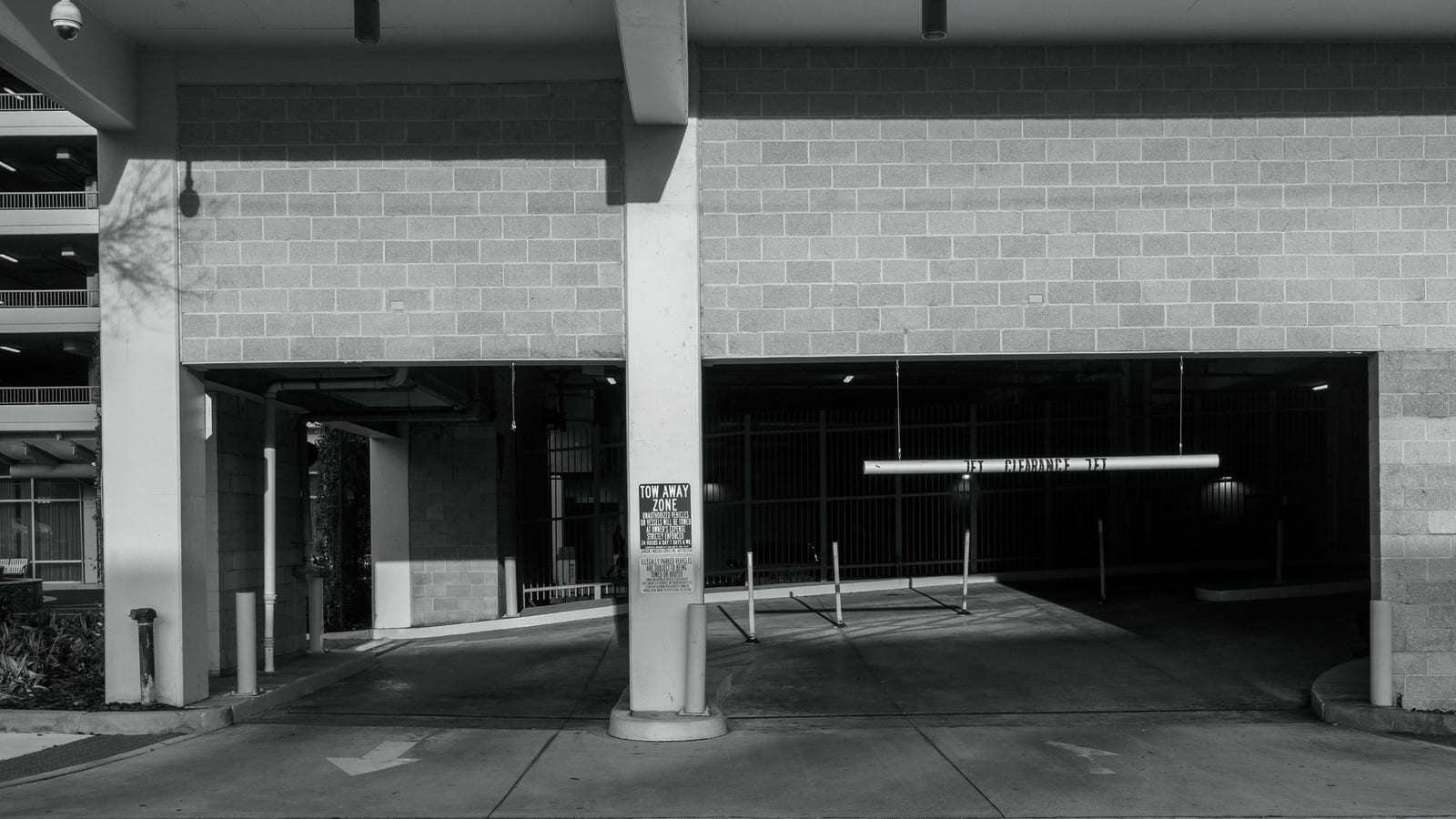
Which sanction the border allows
In Ireland, clamping is a licensed activity regulated by the National Transport Authority, with prescribed maximum charges set out in law. In England and Wales, the Protection of Freedoms Act, section 54, instead makes immobilising a vehicle without lawful authority a criminal offence, in force since 1 October 2012.
Under the Vehicle Clamping Act 2015, the NTA's remit covers "the regulation of clamping activities in clamping places," so a clamp goes on inside a licensed, capped framework. Cross the border and the tool disappears. The wording on legislation.gov.uk has an extent of England and Wales only, and the offence bites on the act of attaching the device, not on whether the parking was legitimate. It is triable either on indictment or summarily.
One exception matters before a site design goes to tender. Driver consent is not lawful authority on its own, but where a fixed barrier was already in place when the vehicle parked, that consent counts. That single line is why a barrier at the entrance changes what an operator can lawfully rely on in England and Wales, and why the sanction question belongs in the site design conversation rather than in the appeal that follows it. Settle it before the contract, because it decides the appeal process, the signage duty and the record underneath both.
Whose clock the site runs on
Under S.I. No. 203/2025, an Irish motorist has 60 days to appeal, the controller has 21 days to answer in writing, and any further appeal goes to an NTA officer who normally decides within 60 days, free throughout. Schedule 4 of the 2012 Act starts a different clock, built around 14 and 28 day windows.
The 2025 appeals procedure regulations, in force since October 2025, set out the detail. A rejection at first stage has to explain how the motorist escalates it, and they then have 30 days from receiving that letter to take it to the Clamping Appeals Officer, who can also make an order as to costs.
England and Wales starts its clock at a different event. Under the keeper liability route in Schedule 4, a notice to keeper served directly must go out within 14 days of the parking period ending, or between day 29 and day 56 where a notice to driver went first. Either route, the keeper cannot be pursued until 28 days have passed from the notice to keeper.
The two clocks do not share a starting gun. The Irish one starts when the clamp goes on, the English and Welsh one when the parking period ends. A record not timestamped to the minute at the point of breach cannot serve both.
Who reviews the decision, and how often it survives
In Ireland the second stage reviewer is a state appeals officer inside the National Transport Authority, with power to award costs against either party. England and Wales sends a disputed charge to the appeals service run by the operator's own trade body, decided on the papers rather than in person.
The NTA's own figures are blunt: 4,501 appeals received in 2025, 3,868 determinations issued, and 56% of those allowed, meaning the controller's original decision did not stand up on review. The first half of 2026 alone brought a further 2,799 appeals. That is roughly 2,166 determinations in one year that went the appellant's way, each one a case handled twice, once by the site inside its 21 day window and again for an officer months later, and a charge that did not stand at the end of it. A workload that size is a staffing question long before it is a legal one, and every hour of it goes on reassembling something the site already had the moment the clamp went on.
The 56% is what a first stage decision looks like when the evidence underneath it is thin: a note that a bay was breached, with no timestamped image behind it. An officer who can order costs has every reason to read the paperwork closely.
In England and Wales the case turns on what the operator filed, months after the visit, which is a question our piece on ANPR accuracy goes into directly.
Operators lose least when the record answers the reviewer's question before it gets asked. That only works if a site can call up the exact visit months later, not a summary of it.
What has to be on the ground before either regime works
Ireland's signage and record duties sit with the operator, not the clamping contractor: minimum sign sizes, a minimum symbol height, the operator's own name and charges on display, and records kept for 3 years. England and Wales asks a narrower question: whether the display requirements were met at the start of the parking period.
Under S.I. No. 421/2017, signs are required at each vehicular entrance and signed pedestrian exit, not less than 0.25 square metres, with a clamping symbol not less than 100 millimetres high, plus the operator's name, contact details and clamp release charge. A vehicle cannot be clamped for a payment breach until 10 minutes have elapsed since detection, and where non payment is the only breach it cannot be relocated for 24 hours.
Across the Irish Sea the duty is narrower and lands in one place. The fourth condition in Schedule 4 turns on whether the display requirements were met at the start of the parking period, so the burden falls on proving what a sign said on one particular day. The third condition turns on applying to the DVLA for the keeper's details in time. The code meant to settle this area across Great Britain has its own timetable, tracked in our note on the December deadline.
Read the two duties side by side and the same weakness shows up in both. Ireland asks what the sign said, when the clamp went on, and what the file still holds 3 years later. England and Wales asks what one sign said on one particular day, months after the driver has gone. A team holding that on paper, in a folder, or inside a contractor's system it cannot query is not holding evidence. It is holding a hope that nobody asks.
Both regimes are decided by the same three things: the sign, the timestamp and the record behind them. Only the sign is bought once as hardware and mostly forgotten about.
Parka holds that record in the shape both regimes ask for, timestamped at the point of breach and kept across the three year Irish window, so when an appeals officer in Dublin or a keeper's solicitor in England asks about a given day, the site's access control system produces the file instead of the team rebuilding it by hand.
The next site to cross the border runs on the process that applies there, the clock that applies there, and a record built to survive two very different reviewers. The choice is whether that record gets built once, before the first appeal lands, or rebuilt from scratch every time one does.
Common questions
What is the most a clamp release can cost at a private car park in Ireland?
Regulation 7 of S.I. No. 421/2017 sets the maximum at €125 where a vehicle has been clamped, €50 where it has been relocated within the clamping place, and €150 where it has been relocated and clamped. Those amounts are fully inclusive of all taxes, and no premium or additional fee may be applied.
How quickly must a clamp come off once the driver has paid?
Regulation 6 requires the clamping operator to remove the clamp as soon as is practicable and not later than 2 hours after receiving payment. Where the vehicle has been relocated to an accessible location instead, it must be made available within 1 hour. The clock runs from payment, not from the driver arriving back at the bay.
Does the clamping ban in the Protection of Freedoms Act cover the whole UK?
No. The Protection of Freedoms Act, section 54, extends to England and Wales only. Parliamentary briefings treat clamping as devolved in Scotland, and we have found no verified source on the current position in Scotland or Northern Ireland, so operators there should check the local position before relying on either regime.
What happens if a driver complains about a clamping operator instead of appealing?
The National Transport Authority handles complaints about clamping activity separately from appeals against a specific clamp. In 2023 it received 144 complaints, completed 135 investigations and upheld 28% of them. A complaint looks at how a site and its operator behave over time, which is why the record matters beyond any single case.
More insights
Have a closer look when you are ready
Book a 30 minute demo and we will walk your team through the platform at your pace.